What Is a Sagra? A Local Festival Explainer for First-Time Visitors
The first time you walk into a sagra, you may feel as though you have stumbled into a wedding. Long tables under a canopy, a queue snaking past a grill, someone's grandmother ladling sauce with the focus of a surgeon. There is no host at the door, no menu on a board, no obvious way to pay. Yet within twenty minutes you are eating well, spending very little, and arguing pleasantly with the couple next to you about whether the fried zucchini flowers were better last year. A sagra is the most democratic restaurant in Italy: open for a weekend, staffed by volunteers, and built around a single dish.
What a Sagra Actually Is
A sagra is a local food festival, usually lasting one or two weekends, that celebrates one product or dish tied to a place and a season. Chestnuts in the hills above Cuneo in October. Frog risotto in the rice country around Vercelli. Porchetta wherever a pig and a wood oven can be found. The setting is rarely grand: the piazza, the parish hall, a schoolyard, a field behind the sports club, a barn borrowed for the occasion.
What separates a sagra from other Italian gatherings is the focus. A festa patronale celebrates a town's patron saint, with a procession and often fireworks, and food is secondary. A fiera is a trade fair or market. A sagra is about something you eat: grown, raised, picked or traditionally cooked right there. The word itself carries an old religious echo — it shares roots with sacro, sacred — and many sagre began as feast-day celebrations that simply kept the cooking part.
Most are run by volunteers: the Pro Loco (the local community and tourism association), the parish, the cycling club, the volunteer ambulance corps. That matters more than it sounds. The people serving you are not employees. They are the parents whose children's school trip is being funded, one plate at a time.
Why Towns Bother: The Point Behind the Plate
Money is part of it. Proceeds typically go to the parish, the sports club, the ambulance association or the restoration of a chapel roof. But listen to the organisers and you hear something else: a village of nine hundred people serving three thousand meals in a weekend is announcing that it still exists.
Sagre also keep food alive that no restaurant would bother with. Dishes built on a cheap local product, made in quantities nobody would cook at home anymore, handed down by people who learned them from their mothers. When a town stops holding its sagra, a recipe usually goes with it. And there is the plain social fact that a sagra gives a pensioner and a seventeen-year-old something to do side by side at the fryer.
The Food: One Dish, Done Properly
Do not arrive expecting choices. A sagra has a short menu, maybe six to ten items, and one of them is the reason everyone came. There will be a first course, a second, a side, a dessert and a drink list of local wine, water and perhaps beer. Anything beyond that is a bonus.
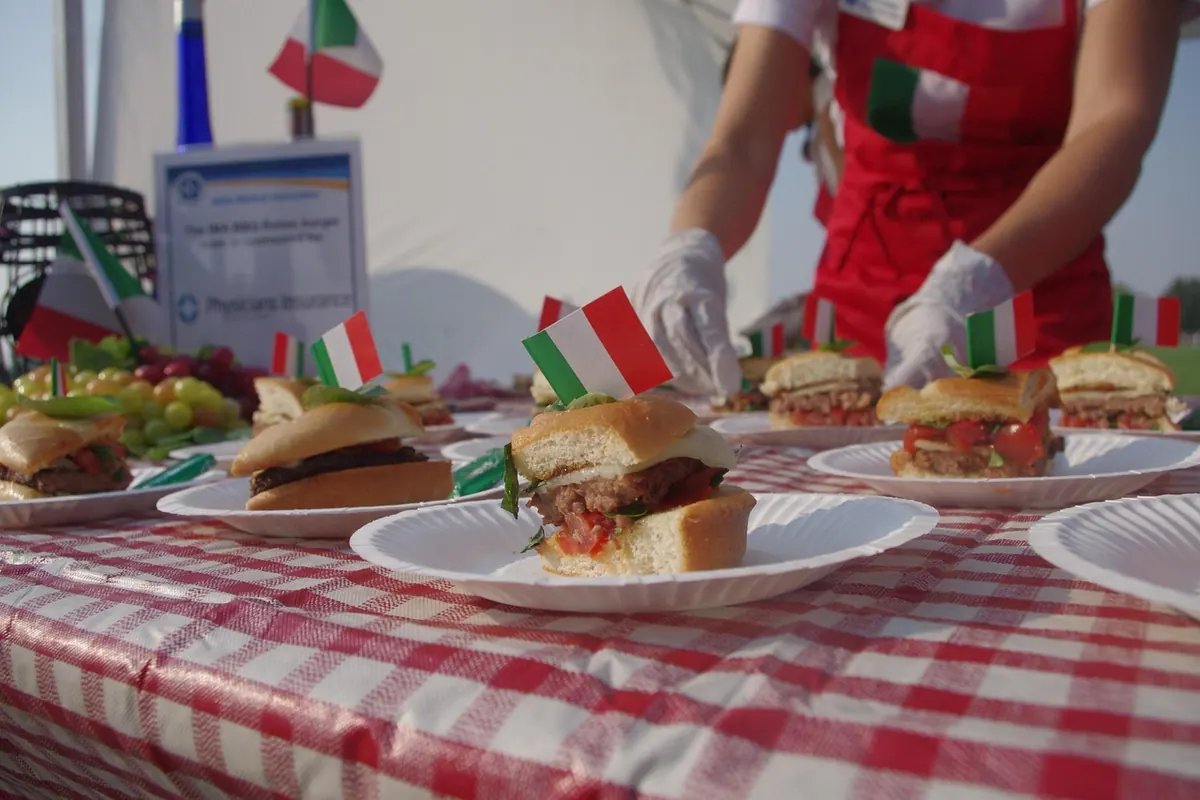
Expect paper or plastic plates, jug wine poured generously, bread that is plain and plentiful, and portions designed for people who have been walking around all day. Quality varies: a sagra is home cooking scaled up to three hundred portions, not a restaurant. Judged on those terms, it can be excellent.
What to Look For
Follow the season and the landscape. If you are in chestnut country in autumn, order the chestnuts and the castagnaccio. Near the sea, look for a fish sagra run by people who know the boats. In the Po Valley, rice dishes and frogs are not a novelty but dinner. The further you get from the obvious, the more likely you are to eat something you cannot find at home.
How a Sagra Evening Runs, Step by Step
The system is nearly identical everywhere, and once you know it you will never look lost again.
- Find the cassa first. That is the cash desk, not the food line. It is often a separate table near the entrance. Joining the wrong queue is the classic first-timer's mistake.
- Order and pay. You will receive a paper receipt or a strip of tickets. This is your food; do not lose it.
- Take the receipt to the matching counter. Courses are usually collected separately from different stations, so your pasta and your grilled meat may come from opposite ends of the tent.
- Sit wherever there is space. Long benches are shared. Ask "è libero?" before you sit down.
- Clear up after yourself. Return trays, stack plates, and use the bins or the plate-return point. Nobody is coming to bus your table.
- Save room for dessert and coffee. Both often live at their own small stand, and the cake is frequently better than anything else on offer.
The Etiquette Nobody Writes Down
- Bring cash. Some sagre now take cards, many still do not, and small notes speed everything up.
- Do not ask for substitutions. The kitchen is a production line run by tired volunteers. A plain plate is fine; a rewritten recipe is not.
- Do not hold a table before you have food on a busy night. Eat, chat, and move on when the queue behind you is long.
- Be patient with the queue. It moves faster than it looks, and it is part of the evening.
- Tipping is not expected. Rounding up is a kind gesture, nothing more.
- Keep dogs away from the food lines, and check whether a procession is passing through before you wander into the square with a plate.
- Dress for a village, not a resort. If a church or a procession is part of the evening, cover your shoulders.
- Some places ask for a small deposit on reusable plates and return it when you hand them back. Ask at the cassa rather than leaving the plate behind.
Practical Tips Before You Turn Up
Check dates properly. Sagre are short and local, so look at the town's Pro Loco page, the noticeboard in the bar, or the posters stapled to poles on the road in. A larger, well-known sagra may have a booking system for tables on Saturday night; smaller ones never do, and turning up is the whole point.
Arrive at seven or after nine. The eight o'clock hour is the crush, when families with small children and groups of friends all hit the cassa at once. Parking is usually on the edge of the village, in a field, with someone waving a torch. Wear shoes you do not mind dirtying.
Bring a light jacket even in summer, since these things happen outdoors and often run late, and take insect repellent if the sagra is in a field. Eat a light lunch. Budget two hours rather than forty minutes: the meal is not the whole event, and lingering is the local habit.
If you are vegetarian, ask. Many sagre have one or two meat-free dishes, but the single-dish format means the answer may be polenta and cheese, and it is worth checking ahead rather than hoping.
The Short Version
Go hungry, bring cash, find the cassa before you join any queue, and sit next to strangers. Order the dish the town is famous for, even if it sounds odd, because that is the entire reason the tents are up. Say thank you to the person handing you a plate — they have been standing there since four in the afternoon — and leave your table tidy when you go. Do that, and you will be treated not as a visitor but as someone who understood what the evening was for.
Photo: extremis / Pixabay

You Might Also Like
A guide to spring foraging the way locals do it — reading the hedgerows politely, picking four reliable greens, and leaving the rest well alone.
Handwoven linens reward a little knowledge. Here are the washing, drying, and storing mistakes that quietly shorten their life — and the simple habits that keep them beautiful for decades.